Description
Key Care Requirements
Water Parameters: Temperature of 18–25°C, pH range of 6.8–7.8, and soft to hard freshwater.
Habitat: Requires robust filtration and moderate-to-high water flow to mimic their natural river habitats. A secure lid is mandatory, as they are strong jumpers.
Diet: Omnivorous; thrive on a varied diet of high-quality flakes, small pellets, and frozen or live foods like bloodworms and brine shrimp. Tank Mates: Best kept with other robust, peaceful community fish of similar sizes, such as larger tetras, rainbowfish, and peaceful loaches.
In the wild, this fish is found in fast-moving streams with some seasonal variation. Wild video footage shows them cruising against the current foraging amongst boulders and the rocky substrate.
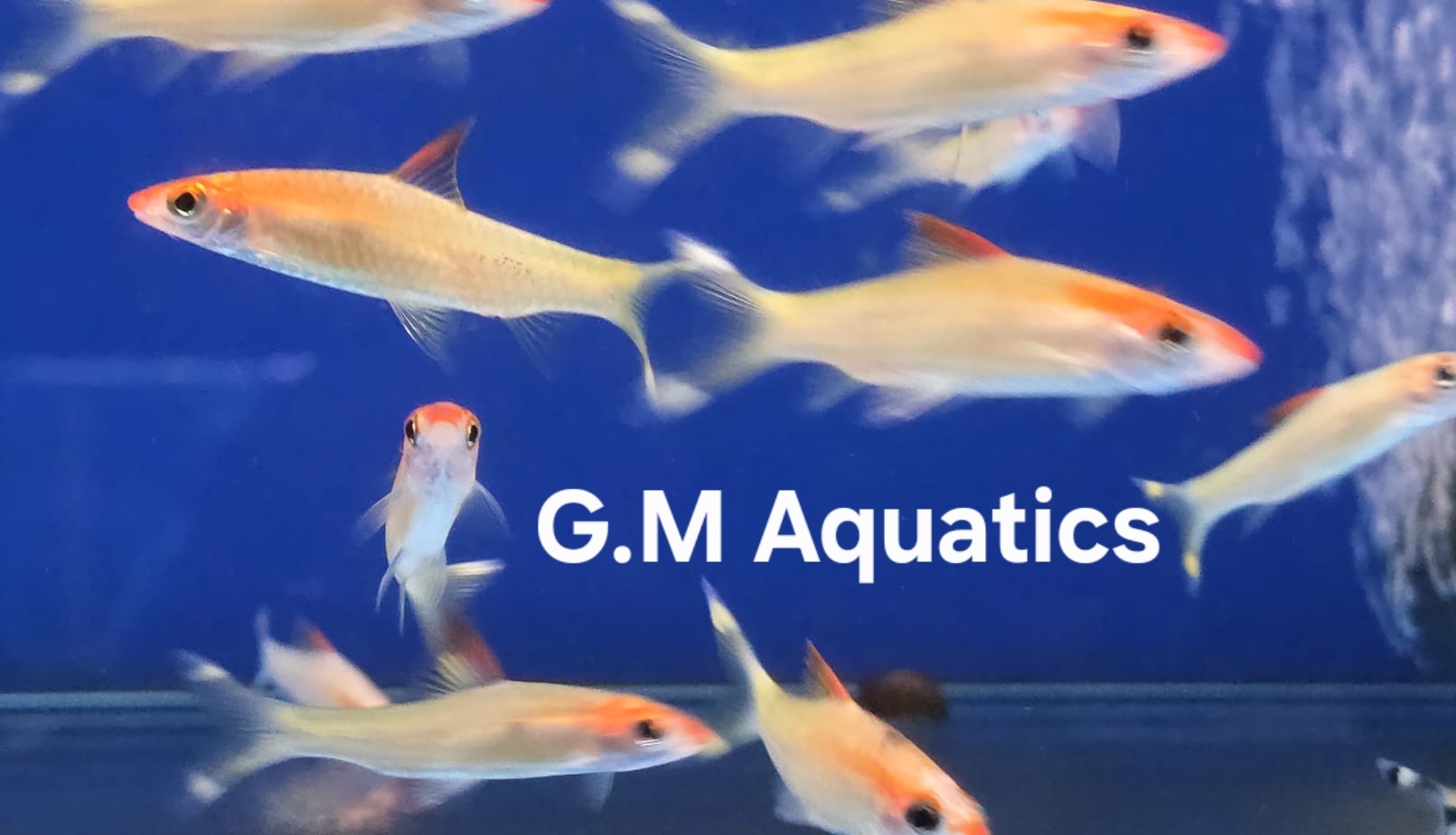
These active fish are not small and require a spacious aquarium. Spraybar returns from external filters should be mounted slightly above the water level to create turbulence and additional pumps should be employed to create extra flow. Red Line Torpedo Barbs are a stunning shoaling species which must be maintained in groups of 6 or more fish. In small numbers, the fish will become very skittish and will not behave in a natural, relaxed manner. Ideally the aquarium will be 4ft long or larger and it should be well-planted at the sides and back to create hiding spots and shady areas. The chosen plants should be of a more robust nature (e.g. Anubias sp. and Java fern) as Red Line Torpedo Barbs may nibble on soft-leaved and fine-leaved plants. These fish make great companions for other medium sized fish such as many of the loach and rainbowfish species, other temperate barbs, larger Danios etc.
A gold strain has been developed and early examples often showed variations in pigmentation, with fish showing different levels of dark pigmentation which came and went. Such fish could be described as calico during periods of light and dark colouration. The other member of the genus (D. chalakkudiensis) is occasionally seen as a wild import and can be distinguished by its dark dorsal fin markings and more limited red patch. A few common names are known for this fish, such as Roseline shark or more alarmingly its native name translates as Bleeding-eyes barb!
Wild populations are facing a number of challenges and are rarely imported, although responsible trade can play a part in protecting wild stocks by adding economic value to their preservation and an extra incentive to protect their habitat. Demand is usually filled by captive bred specimens, which are already adapted to aquarium life.