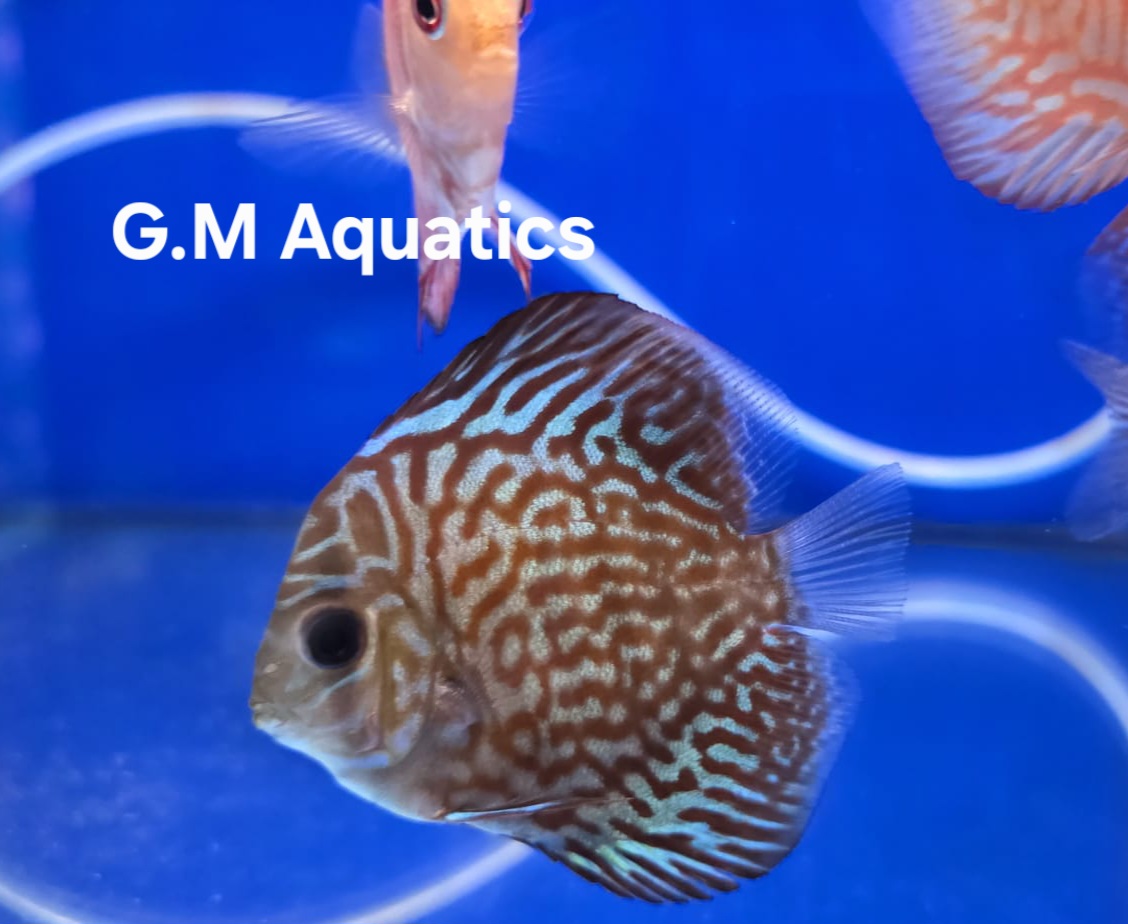
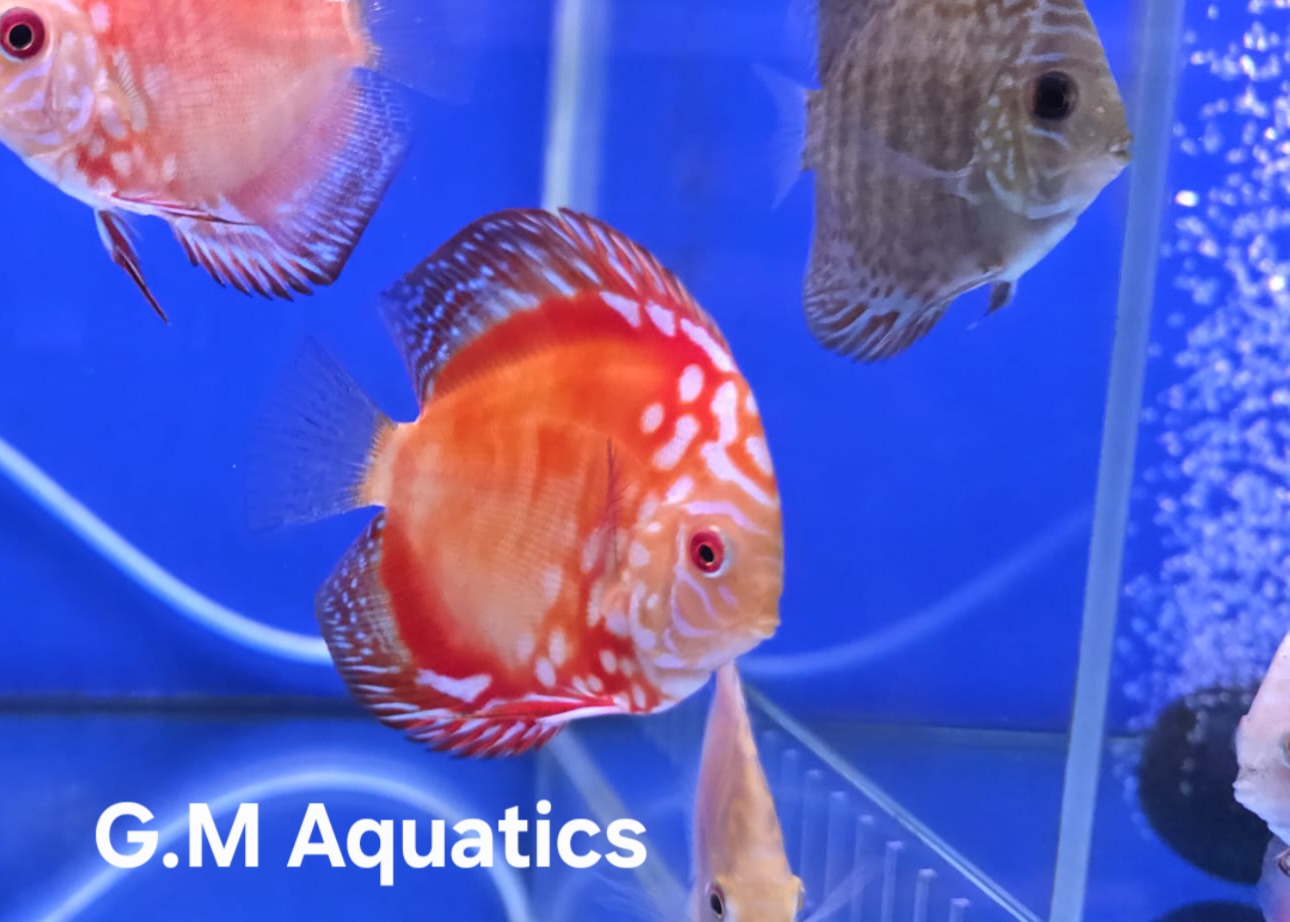
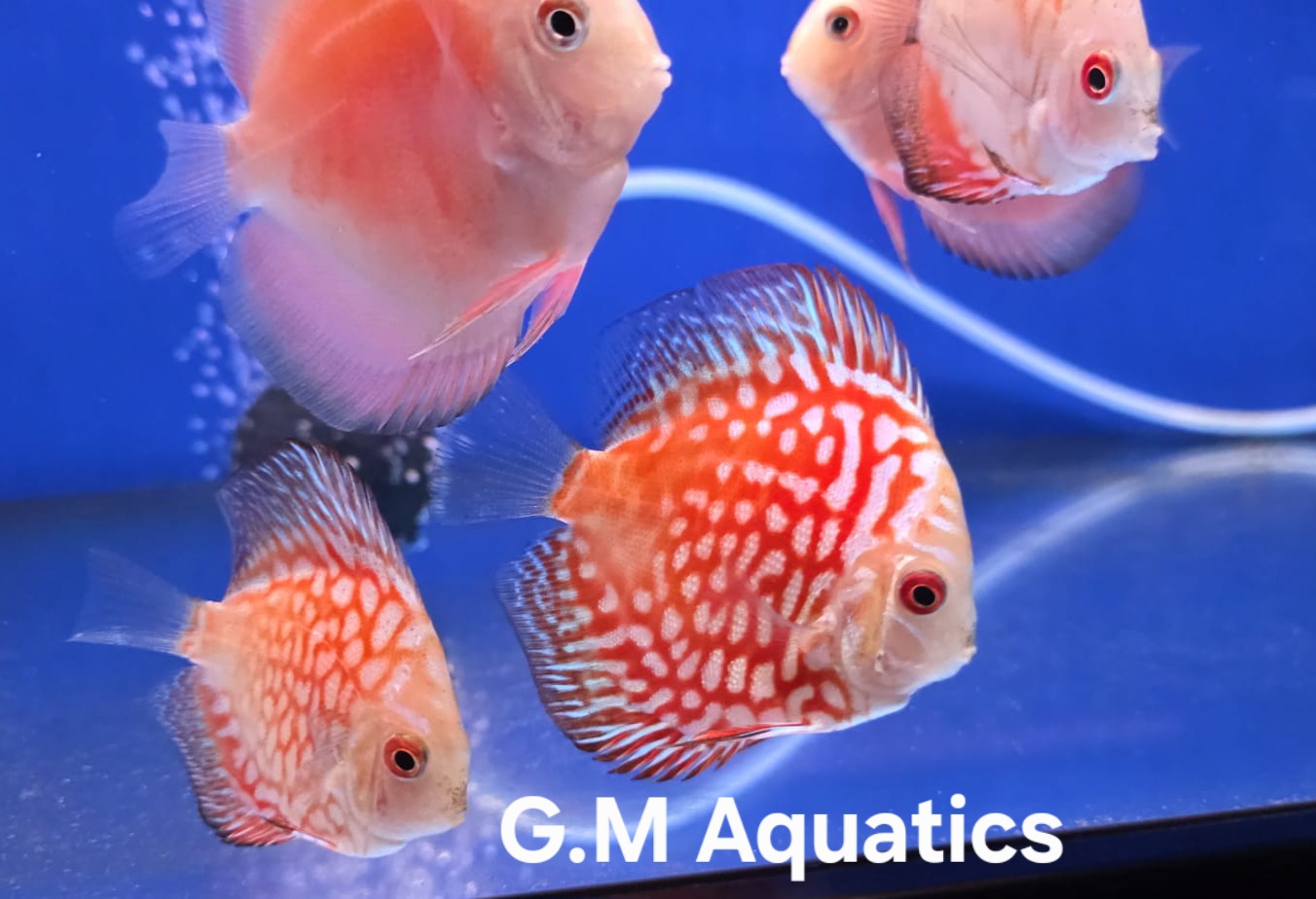
Description
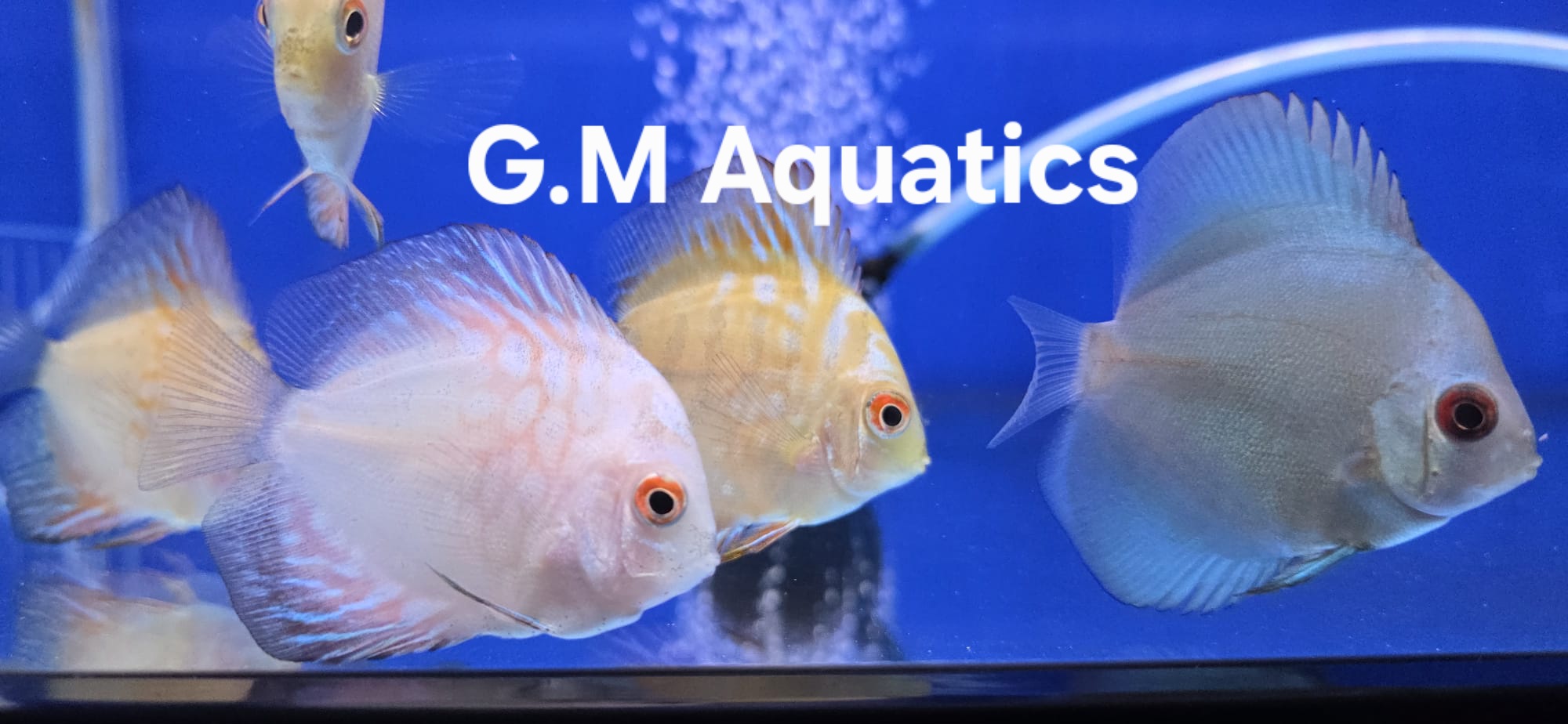
AVAILABLE NOW IN STOCK
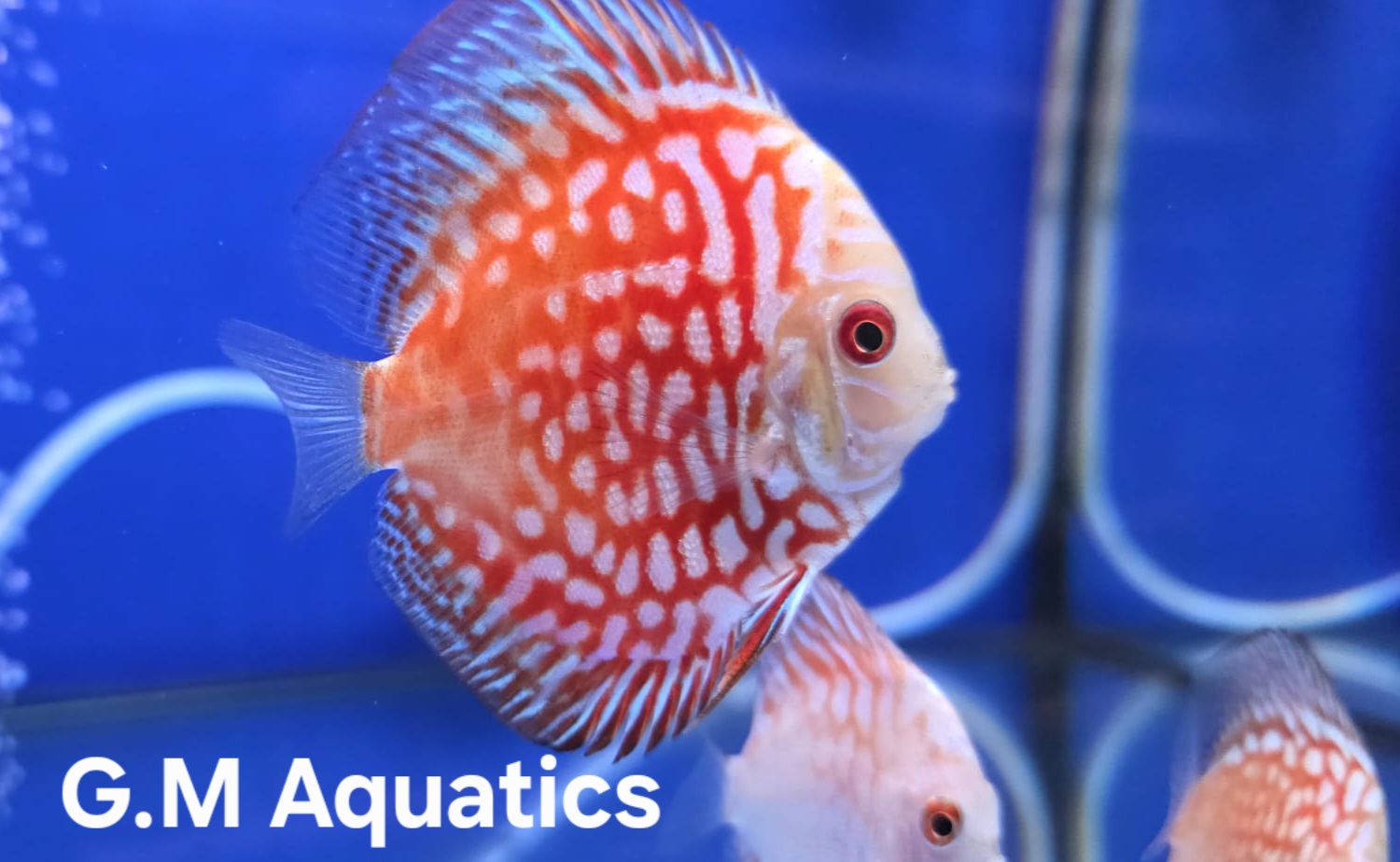
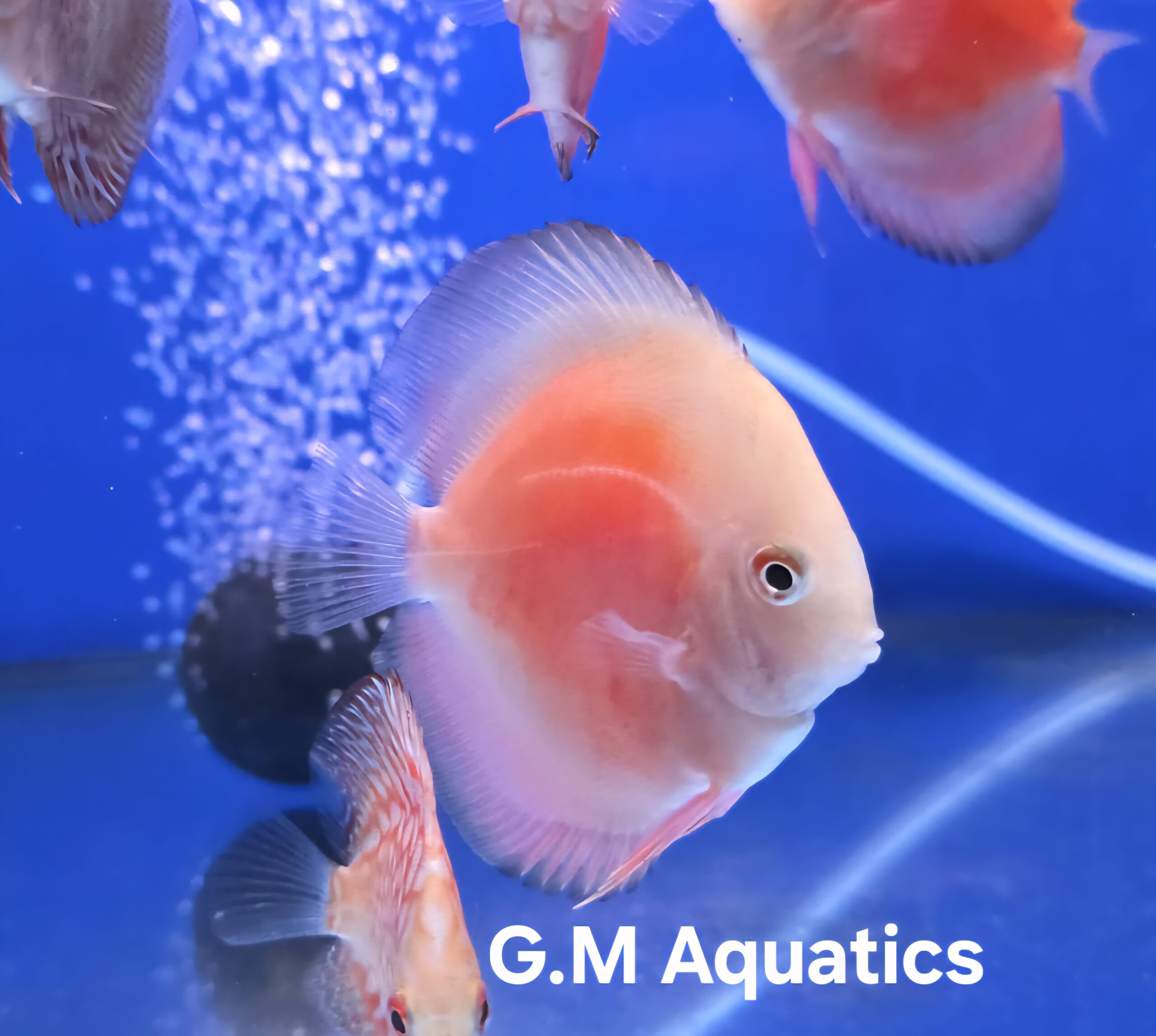
RED PANDA 3
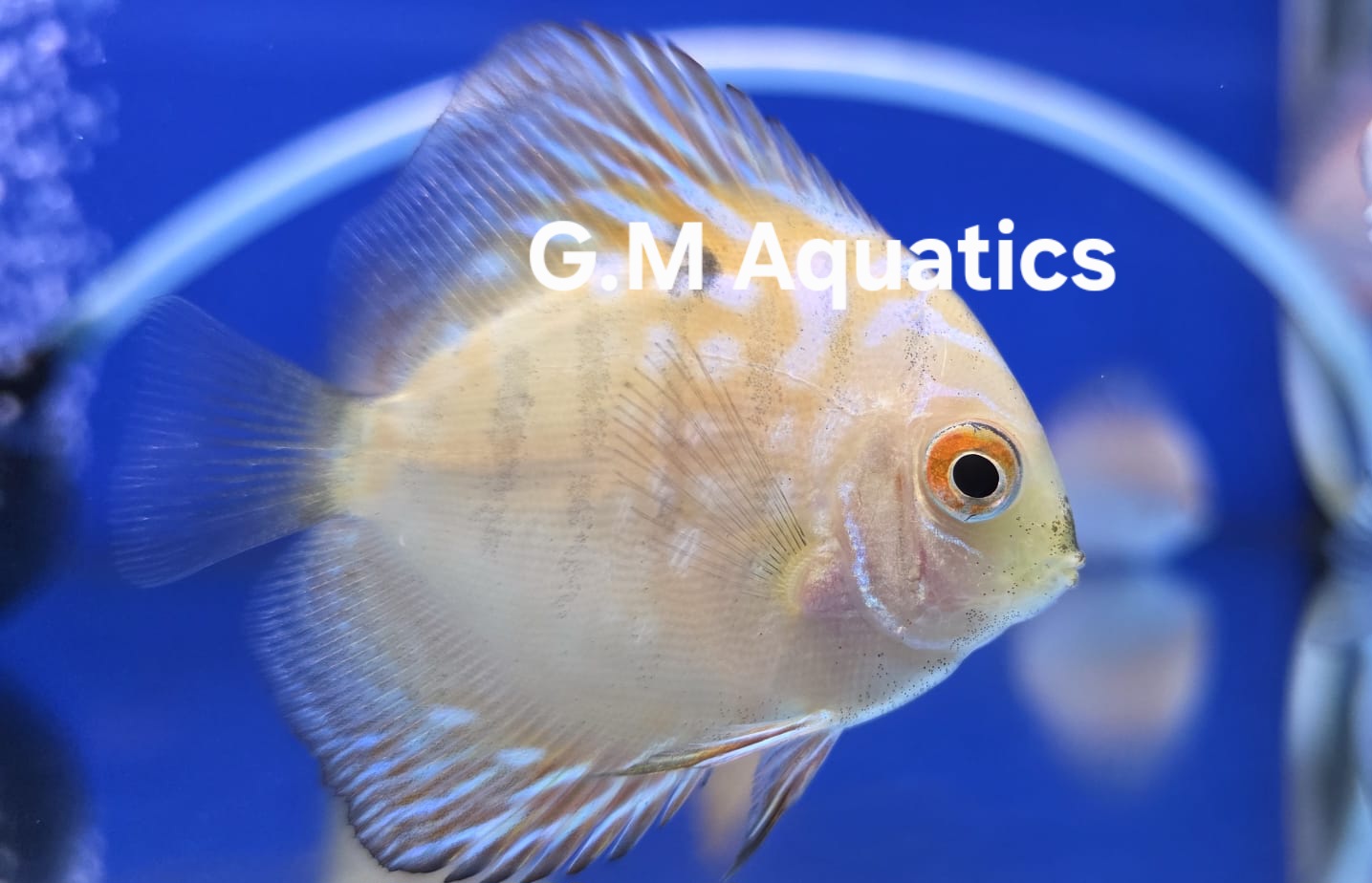
GOLDEN CRYSTAL 2
LEOPARD 1
RED WHITE 3
CHECKERBOARD RED 3
MARLBORO RED 3
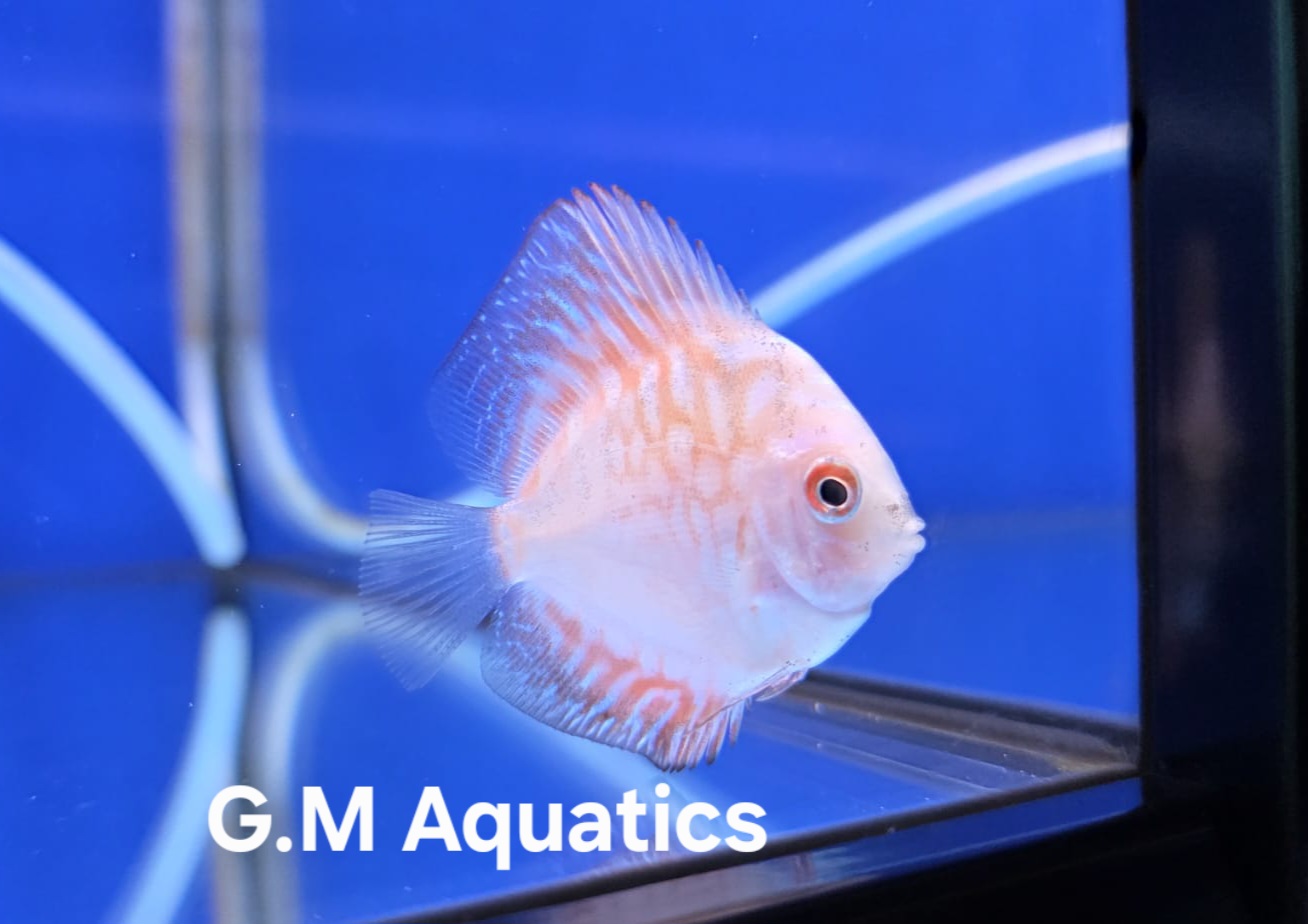
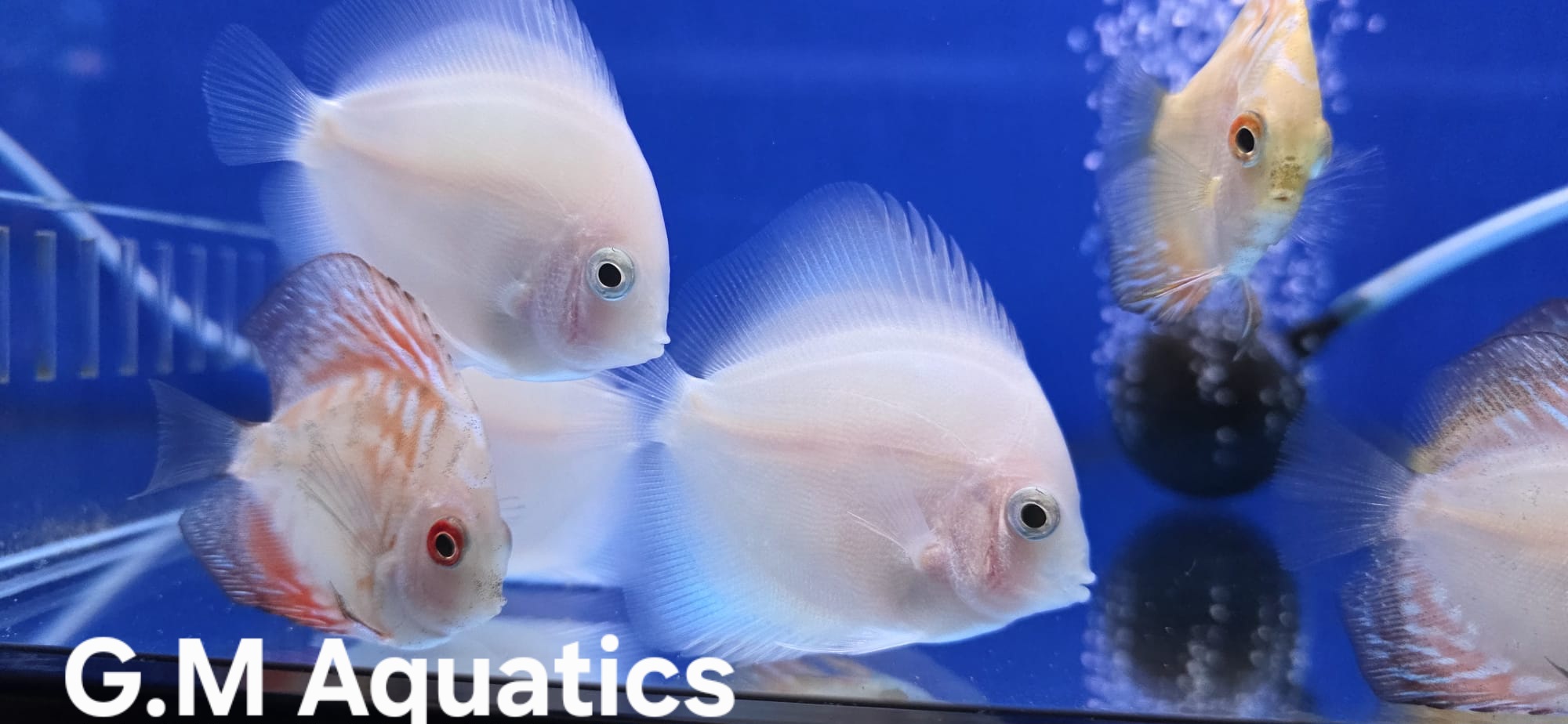
WHITE TIGER 1
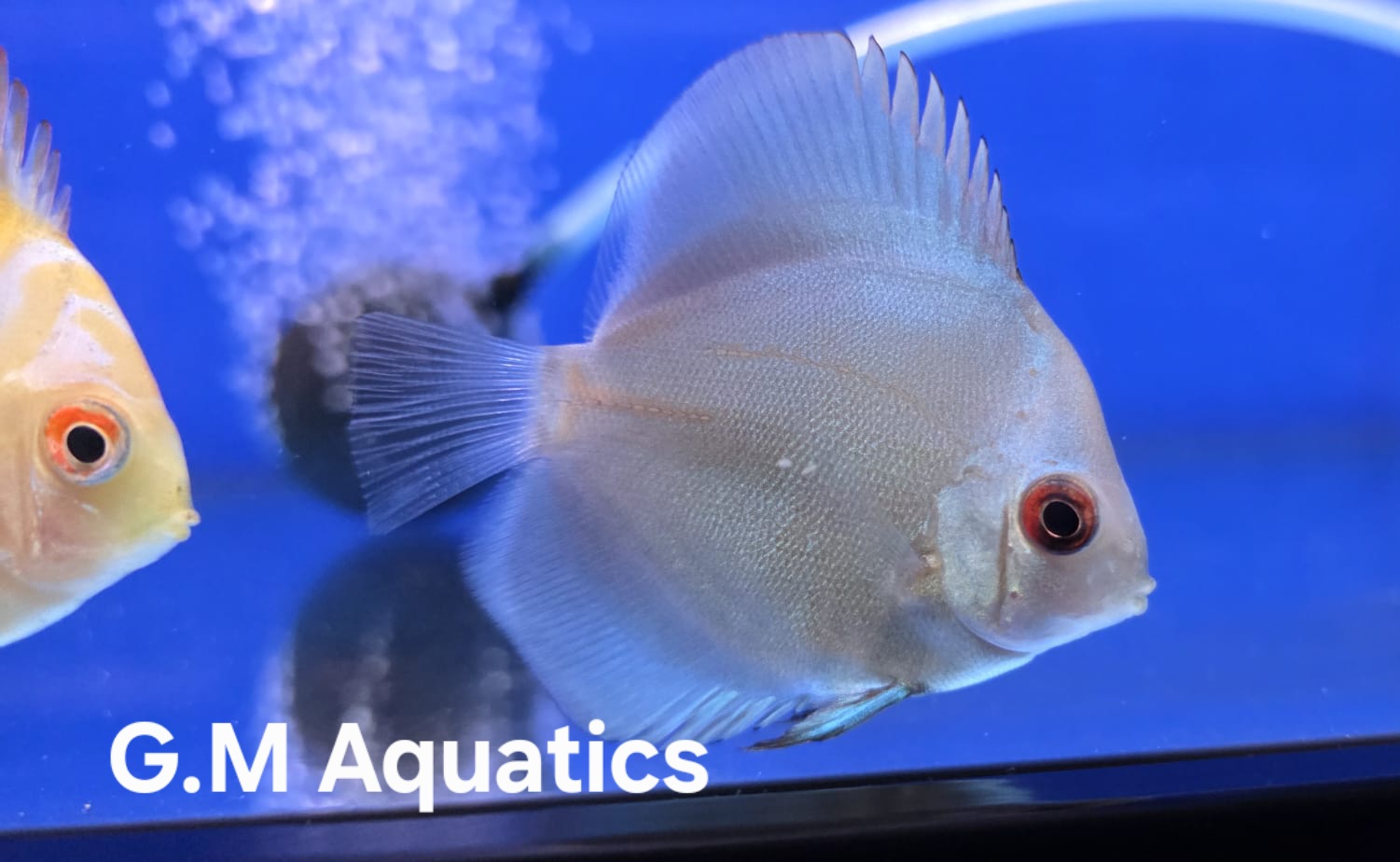
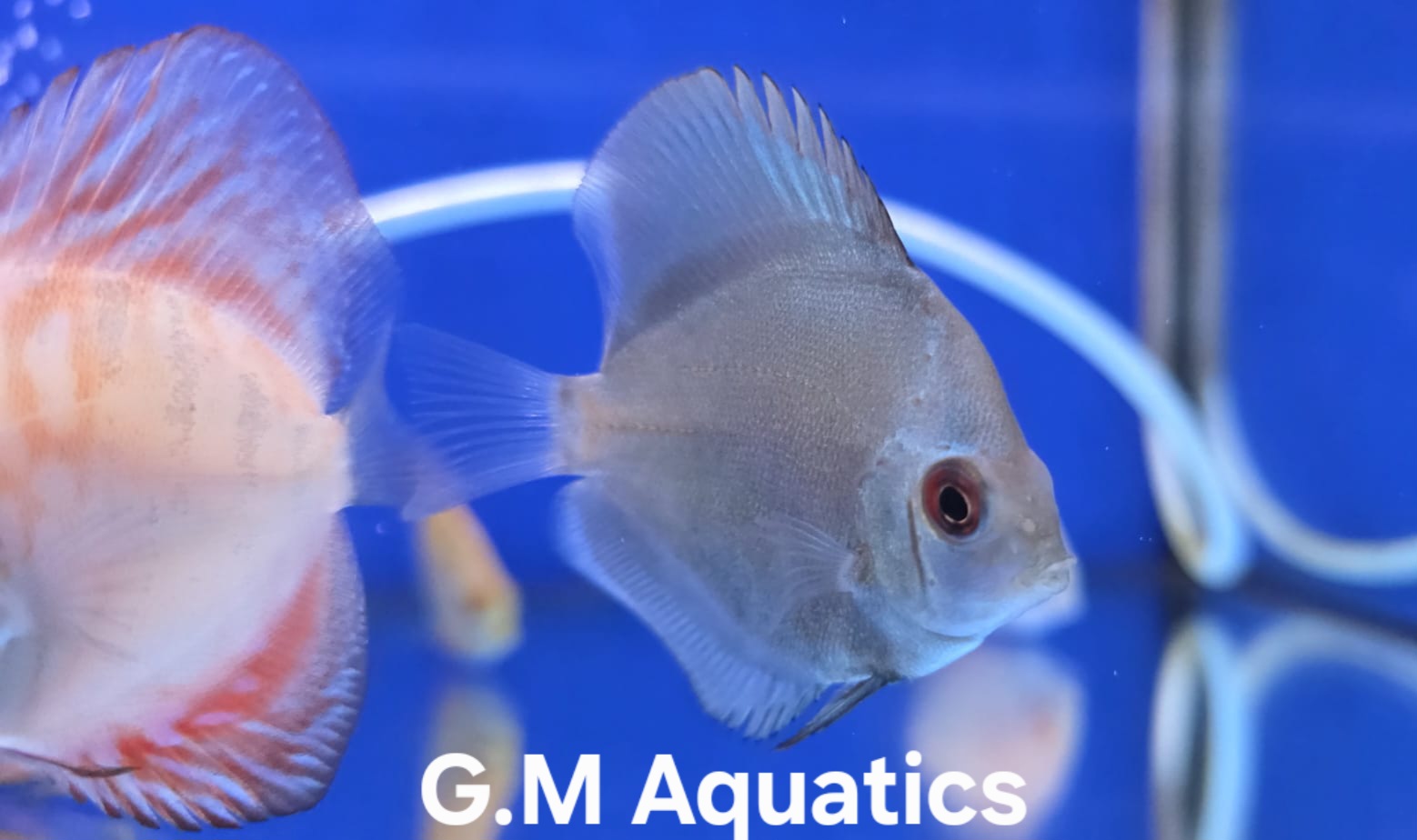
BRILIANT BLUE TURQUISE 2
Whilst many myths abound regarding the care of discus in the aquarium (and individual opinions will vary), there are a few tips that are best adhered to for successful maintenance.
Firstly, the tank should be large enough to comfortably accommodate these majestic laterally-compressed fish.
This means depth should be taken into consideration in addition to length and width.
Secondly, the tank should be well-established, with warm, highly-oxygenated, soft & acidic water.
It is important that excellent water quality is maintained at all times, so efficient filtration and regular partial water changes are a must. The output from the filter should be moderate (but not overpowering) for these relatively slow swimmers, and lighting should be slightly subdued or else diffused with some floating plant cover.
Furnish the tank with plenty of bogwood pieces/twisted roots and plants, but leave a large open swimming space along the front of the aquarium.
Domestic discus dont always appreciate naturalistic surroundings at first and may be more comfortable in more familiar spartan surroundings.
As Discus are very sensitive to the dissolved metals and organics found in many tap water supplies, an RO unit is definitely worth considering.
Discus are best maintained in large groups, in order for them to form a natural hierarchy.
Add 5 or 6 fish to start with, and assuming all goes well, add another few to the shoal a short while afterwards, choosing fish of similar size.
Tankmates must be chosen with care.
They should be of a peaceful nature and behave placidly at feeding times, not too small that they may be eaten by any adult Discus in the tank, and preferably diurnal so that they don’t worry the discus overnight with boisterous activities.
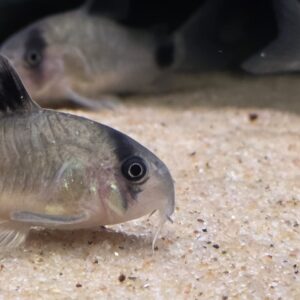
Ideal companions are warmth tolerant Corydoras catfish, Bristlenose (Ancistrus sp.) and peaceful dwarf cichlids such as Rams or Apistogramma sp.
It should be mentioned that some European Discus suppliers are now keeping their Discus in conditions closer to neutral, and in some cases even in slightly alkaline conditions.
Speak to your local store to find out where their Discus were sourced from and what conditions they are being kept in.
You should always avoid mixing Discus from different sources (i.e. Asian vs European) wherever possible.
Different colour strains (and there are lots of them!) from the same origin and the same supplier can be mixed without difficulty.
At present, taxonomists consider there to be 3 separate species of Discus: Symphysodon aequifasciatus, S. discus, and S. tarzoo with geographical forms and instances of natural hybridisation.