Description
Rohanella titteya
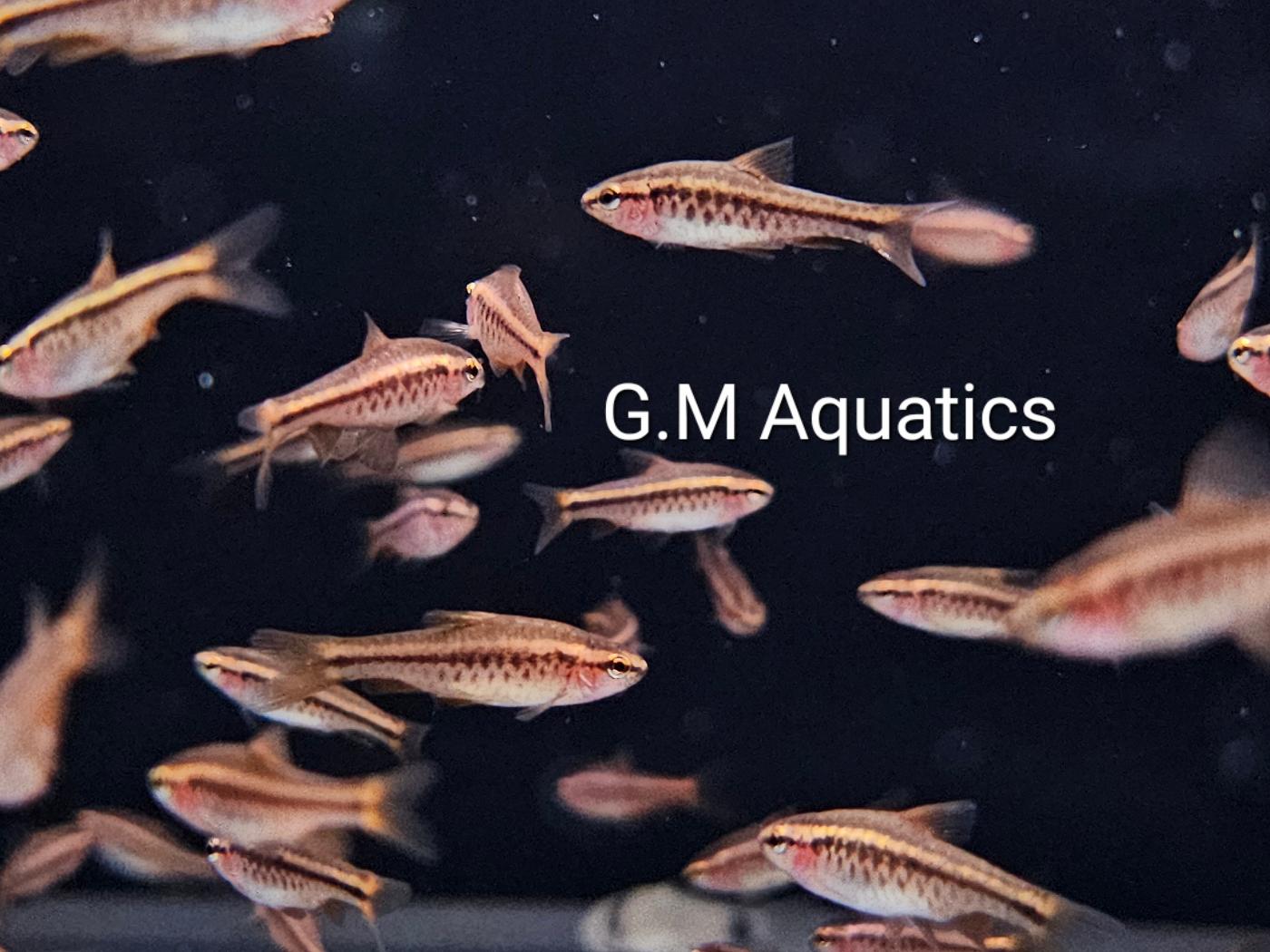
A fish with a long aquarium history, cherry barbs are found in relatively cool forest streams in their ancestral homelands, preferring habitats which benefit from the shade of old growth forest. These tend to be sandy with lots of leaf litter and few submerged plants, although marginal vegetation provides plenty of cover. Although not particularly shoaling by nature, this is a social species and males generally space themselves out in discreet territories towards the lower levels of the aquarium, courting the females as they swim past in groups. As with most fish, males will show their strongest colouration when trying to impress their rivals and attract the females, so avoid the temptation to select only males despite the females’ more modest colouration. As they’ve been bred for aquaria for many generations, domestic strains have become far redder than their wild kin, which tend to show more purple tones. As this species is threatened by habitat loss in the wild (mainly through deforestation) you are very unlikely to see these fish in captivity. Recently an albino form has been reinvigorating the popularity of this species and this has even been bred into a long-finned variety which should be kept away from the nippier barbs which otherwise make suitable companions. For their part, cherries are excellent community fish which can be trusted with most tankmates. A reshuffle of barb taxonomy has seen this fish moved into its own genus, Rohanella – showing the distinction between this model citizen and some of the rowdier barbs.